
Sweepstakes Casino Mail-In Entry — AMOE Explained
 Available in US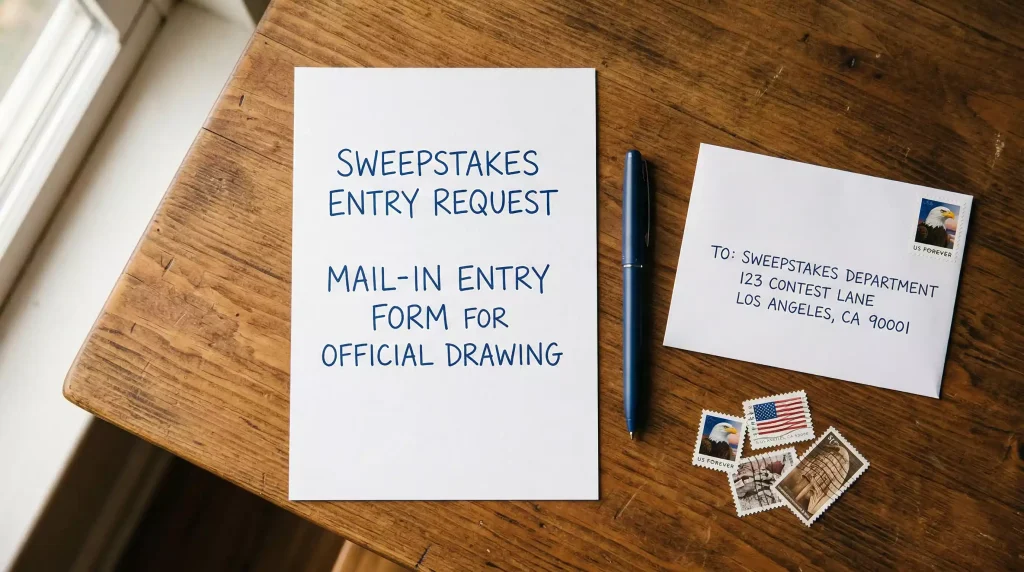
Every legitimate sweepstakes casino offers a way to receive free Sweeps Coins without spending money or winning gameplay sessions. The Alternative Method of Entry—commonly called AMOE or mail-in entry—lets you request promotional currency by sending physical letters to casino addresses. It sounds almost quaint in the digital age, but it’s both legally required and genuinely functional.
Mail-in entries exist because sweepstakes law demands free entry methods. As Magnus Boberg, founder of JustGamblers, explains: “Traditional gambling requires three elements: consideration (payment), chance, and prize. Sweepstakes sites do not require payment, so they bypass regulations that apply to traditional online gambling.” The AMOE system ensures payment truly remains optional by providing a completely free path to promotional currency.
For players committed to avoiding purchases entirely, mail-in requests represent one of the largest free currency sources available—often delivering more Sweeps Coins per request than weeks of daily login bonuses combined. This guide covers exactly how AMOE works, proper submission formatting, and strategies for maximizing your mail-in returns.
What Is AMOE
AMOE stands for Alternative Method of Entry, the legal requirement that sweepstakes promotions provide ways to participate without purchase. In traditional sweepstakes like magazine subscription contests, this meant sending postcards requesting entry. Sweepstakes casinos adapted the concept to their promotional model, allowing mail-in requests for Sweeps Coins.
The legal foundation stems from sweepstakes regulations distinguishing promotions from gambling. True gambling requires “consideration”—something of value exchanged for the chance to win. Sweepstakes eliminate the consideration requirement by offering free entry methods. Without AMOE, sweepstakes casinos would risk classification as illegal gambling operations subject to gaming commission oversight.
How AMOE works practically: you send a properly formatted letter to a casino’s designated address requesting free Sweeps Coins. The casino processes your request and credits your account, typically within one to three weeks. The amount received varies by platform but often ranges from 2-10 Sweeps Coins per valid request.
Request frequency limits prevent abuse of the system. Most platforms allow one mail-in request per day or per week, with monthly caps sometimes applying. These restrictions balance the legal requirement for free entry against operators’ economic interests in encouraging purchases. Staying within stated limits ensures your requests get processed rather than rejected for violation.
AMOE accessibility across more than 45 US states where sweepstakes casinos operate legally according to KPMG makes it a universally available option for eligible players.
How to Submit Mail-In Requests
Successful mail-in submissions require following platform-specific formatting requirements precisely. Casinos reject requests that deviate from stated guidelines, making attention to detail essential for consistent approvals.
Start by locating official AMOE instructions for your chosen platform. These typically appear in Terms of Service documents, FAQ sections, or dedicated sweepstakes rules pages. Never rely on third-party summaries that might contain outdated information—casinos update requirements periodically, and using old formatting causes rejections.
Most platforms require handwritten requests rather than printed letters. This requirement helps prevent mass-produced requests and ensures individual human effort. Use legible handwriting in pen rather than pencil. Print rather than use cursive if your cursive is difficult to read. Staff processing thousands of requests daily appreciate clarity.
Standard request elements include your full legal name exactly matching your account registration, your complete mailing address, your account username or email address, and a statement requesting free entry. Some platforms require specific wording—using their exact phrasing rather than paraphrasing ensures compliance.
Envelope formatting matters as much as letter contents. Many casinos specify envelope sizes, typically standard #10 business envelopes. Some require self-addressed stamped envelopes (SASE) included with your request for response mailing. Others accept requests without return postage. Following envelope requirements prevents rejection before staff even read your letter.
Mailing addresses differ by platform and sometimes by request type. Verify you’re using current addresses—companies relocate occasionally, and outdated addresses result in undelivered mail. Use standard USPS First Class postage unless platforms specify otherwise. Tracking isn’t typically necessary given the low stakes involved, though it provides confirmation of delivery if desired.
Keep copies of each submitted request including the date mailed. This documentation helps track which requests remain pending and identify patterns if rejections occur. Photographing completed requests before mailing creates reference records without significant effort.
Template and Example
While exact wording requirements vary by platform, most AMOE requests follow a consistent general format. The example below illustrates typical structure—always verify platform-specific requirements before sending.
A standard mail-in request includes several key components arranged clearly on the page. Begin with your full legal name as registered on your casino account. Follow with your complete mailing address including apartment or unit numbers if applicable. Include your email address or username associated with your casino account. Add the current date. Finally, write your entry request statement using required wording from the platform’s official instructions.
Example request structure typically reads something like: “I, [Your Full Name], hereby request free entry into the [Platform Name] sweepstakes promotion. My registered account email is [email address]. My mailing address is [full address]. Date: [current date].” Platforms may require additional statements, specific phrases, or different arrangements—always defer to official instructions.
Common mistakes that cause rejections include name mismatches between letters and account registrations, missing required elements like dates or specific statements, illegible handwriting that staff cannot process, and using incorrect addresses from outdated information. Careful attention to each required element prevents these easily avoidable failures.
Envelope addressing follows standard postal conventions. Your return address appears in the upper left corner. The casino’s AMOE address centers on the envelope front. Sufficient postage covers standard letter weight—add stamps if enclosing multiple pages or return envelopes.
Which Casinos Accept Mail-In
All legitimate sweepstakes casinos must offer AMOE to maintain legal compliance, though enthusiasm for publicizing these options varies. Some platforms make mail-in instructions easily accessible; others bury requirements in lengthy terms documents. Knowing where to find information saves searching time.
Chumba Casino provides well-documented AMOE procedures reflecting their years of operation. Their terms of service clearly outline formatting requirements, mailing addresses, and frequency limits. As one of the oldest sweepstakes platforms, Chumba’s processes are well-established and consistently processed.
LuckyLand Slots shares corporate parentage with Chumba and maintains similar AMOE procedures. Instructions appear in official rules documents, and processing follows comparable timelines. Players active on both platforms can submit separate requests to each.
Stake.us publishes AMOE information within their promotional terms, though the crypto-focused platform emphasizes digital engagement over mail-based entry. Requests still process for players who submit properly formatted letters.
McLuck, WOW Vegas, and Pulsz each maintain AMOE compliance with varying visibility in their documentation. Searching official rules or terms pages for “alternative method” or “mail-in” typically surfaces relevant instructions. Customer support can also provide current requirements if search proves difficult.
Smaller platforms and newer entrants sometimes have less polished AMOE documentation, though legal requirements still apply. Contacting support directly often yields clearer instructions than hunting through dense terms documents. Request official written guidelines rather than verbal instructions to ensure accurate compliance.
Platform-specific details change periodically—addresses relocate, frequency limits adjust, and formatting requirements evolve. Verify current information before each submission batch rather than relying on months-old instructions that may have since changed.
Tips for Success
Maximizing mail-in success rates requires systematic approaches beyond simply following formatting guidelines. These practical strategies help ensure your requests convert into credited Sweeps Coins.
Batch your request preparation to reduce effort while maintaining submission frequency. Write multiple letters in single sessions, then mail them on appropriate schedules to comply with frequency limits. This assembly-line approach takes less cumulative time than preparing individual requests as submission dates arrive.
Use quality paper and envelopes that survive postal handling. Flimsy materials may tear during sorting, damaging contents and causing processing failures. Standard business-weight paper and envelopes provide adequate durability without unnecessary expense.
Mail requests early in the week to avoid weekend postal delays that extend processing timelines. Monday arrivals typically process faster than Friday submissions sitting through weekends. This timing optimization marginally accelerates credit delivery.
Track response patterns across platforms. If one casino consistently credits requests within ten days while another takes three weeks, adjust your submission timing accordingly. Understanding platform-specific processing speeds helps manage expectations and identify potential issues when credits seem delayed.
Remain patient—processing legitimately takes weeks. Contacting support about pending requests before reasonable timeframes elapse wastes everyone’s time without accelerating processing.
Sweepstakes Casino Mail-In Entry — More on this topic at top sweepstakes casinos.
See also Chumba Casino Review 2026.