
Sweepstakes Casinos Banned States — Full 2026 List
 Available in US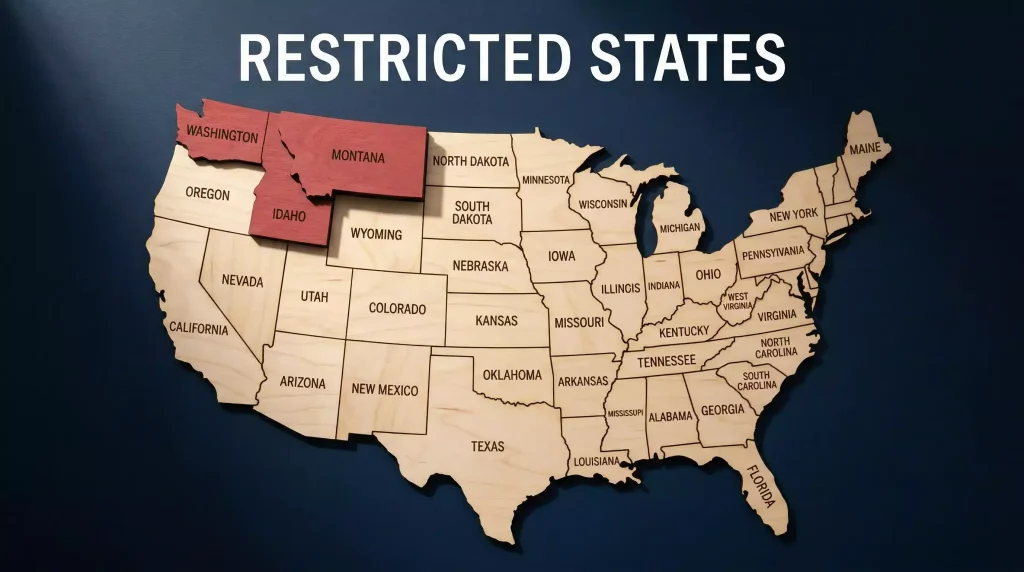
Sweepstakes casinos operate legally across most of the United States, but not everywhere. A growing list of states has banned or severely restricted these platforms, cutting off residents from promotional gaming opportunities available to most Americans. If you live in one of these states, every major sweepstakes casino will block your registration or flag your account.
The banned state list expanded significantly in 2026, with several major markets joining previously restricted jurisdictions. Understanding which states prohibit sweepstakes casinos—and why—helps players assess their options and avoid wasting time on platforms that won’t serve them.
This guide provides the complete current list of banned and restricted states as of 2026, explains the legal and political reasoning behind each restriction, covers recent legislative changes that altered the landscape, and addresses what happens if you try playing from prohibited locations. The information helps affected residents understand their situation while helping others recognize how regulatory pressure continues reshaping sweepstakes gaming access.
Complete Banned States List
The following states currently prohibit or severely restrict sweepstakes casino operations. Residents of these states cannot legally access most sweepstakes platforms, and operators actively block registrations from these locations.
Washington state maintains the longest-standing sweepstakes casino ban, rooted in broadly written gambling statutes that regulators interpret to include promotional gaming. The state’s position predates the sweepstakes casino boom, reflecting general hostility toward online gambling rather than specific opposition to the sweepstakes model.
Idaho prohibits sweepstakes casinos under gambling laws that don’t recognize the promotional sweepstakes distinction most states accept. The conservative regulatory environment shows no signs of reconsidering this position despite industry growth elsewhere.
Montana restricts sweepstakes casino access based on existing gambling regulations. The state’s approach focuses on protecting established gambling interests—particularly the Montana Lottery—from potential competition rather than moral opposition to gaming itself.
Nevada ironically restricts sweepstakes casinos despite being America’s gambling capital. The established casino industry successfully lobbied against allowing promotional gaming models that might compete with traditional gambling operations. Regulatory capture protects incumbent interests over consumer choice.
California joined the banned list in 2026 through Assembly Bill 831, representing the most significant market closure in sweepstakes history. The state’s massive population made it a crucial market, and its loss reshapes industry economics substantially.
New York banned sweepstakes casinos in 2026, removing another major population center from accessible markets. The state’s licensed gambling interests successfully argued that sweepstakes platforms competed unfairly with regulated operations paying licensing fees and taxes.
Connecticut restricted sweepstakes casino access in 2026 as part of broader efforts to protect tribal gaming compacts. The state’s gambling framework prioritizes tribal interests, and sweepstakes platforms threatened that established arrangement.
Additional states including Michigan and others have issued cease-and-desist notices to operators without implementing complete bans. These partial restrictions create uncertainty for both players and platforms, with some operators choosing voluntary exit rather than risking enforcement actions.
Why These States Banned
State motivations for banning sweepstakes casinos cluster around several recurring themes, though specific reasoning varies by jurisdiction. Understanding these motivations helps predict which states might restrict access next.
Protection of established gambling interests drives many bans. Traditional casinos, state lotteries, and tribal gaming operations all view sweepstakes platforms as competitors siphoning potential revenue. These incumbents possess political influence that newer sweepstakes operators cannot match. As Dan Hartman, former Colorado Division of Gaming Director and current GMA Consulting advisor, observed: “The one thing I’ve said all along is you can’t all break in through the backdoor. Companies pay a lot to get licensed and do the things they do in our state.”
Tax revenue concerns motivate state legislators. Licensed gambling generates tax income while sweepstakes casinos operating under promotional law don’t pay comparable fees. States seeing gambling tax revenue threatened by sweepstakes competition have economic incentives to restrict these platforms regardless of consumer preferences.
Consumer protection arguments sometimes justify restrictions, though evidence supporting harm claims remains disputed. Opponents characterize sweepstakes casinos as unregulated gambling exploiting legal loopholes to avoid oversight designed to protect players. Whether this framing reflects genuine concern or convenient justification for protectionist motives depends on who you ask.
Existing gambling compact obligations constrain some states. Tribal gaming agreements often include provisions protecting tribes from competition, and sweepstakes platforms potentially violate these arrangements. States honoring compact commitments may restrict sweepstakes access to maintain tribal relationships and legal compliance.
Recent Bans 2026-2026
The 2026-2026 period brought unprecedented regulatory pressure against sweepstakes casinos, with multiple major states implementing bans and over 100 cease-and-desist letters issued to operators according to iGamingBusiness reporting.
California’s AB 831 represented the most consequential development. The nation’s most populous state closing to sweepstakes casinos removed approximately 17% of the US market based on population alone—and likely higher percentages based on actual player distribution. Operators who derived significant revenue from California faced immediate business model challenges.
New York’s ban similarly removed a massive market. The state’s dense population and high internet penetration made it disproportionately valuable for sweepstakes operators. Combined with California’s closure, the two 2026 bans eliminated access to roughly 60 million Americans who previously could play legally.
Connecticut’s restrictions protected the Mohegan Sun and Foxwoods tribal casinos’ competitive positions. The state’s compact obligations and political relationships with tribal gaming interests made restriction politically straightforward despite limited public demand for action.
The cease-and-desist wave affected operators across multiple states without formal bans. Arizona, Michigan, and other states sent enforcement letters demanding operators cease serving their residents. Some platforms complied voluntarily; others contested the legal basis for demands. The resulting patchwork of partial restrictions created confusion for players uncertain whether their state access remained legitimate.
Montana formalized previously informal restrictions, clarifying that sweepstakes platforms could not operate within state boundaries. The explicit ban replaced ambiguous enforcement positions with clear prohibition.
Playing from a Banned State
Attempting to access sweepstakes casinos from banned states creates risks that generally outweigh potential rewards. Understanding likely consequences helps residents make informed decisions.
Geolocation technology identifies your physical location during registration and periodically during play. Modern systems detect VPN usage and flag accounts showing location inconsistencies. Operators actively enforce geographic restrictions because serving banned states threatens their licenses and legal standing elsewhere.
Account termination typically follows discovery of prohibited state access. Platforms will close accounts, void pending redemptions, and potentially forfeit existing balances when terms violations are confirmed. The operator’s legal exposure from serving restricted states justifies aggressive enforcement.
Legal risks for individual players remain mostly theoretical but aren’t zero. States could theoretically pursue players violating gambling restrictions, though enforcement against individuals remains rare compared to operator-focused actions. The low prosecution likelihood doesn’t eliminate risk entirely.
Practical alternatives for banned state residents include waiting for potential regulatory changes, relocating to permitted states, or accepting that sweepstakes casinos aren’t currently accessible. Attempting circumvention rarely ends well when platforms have strong incentives to detect and block prohibited access.
Future Changes
The regulatory trajectory suggests continued pressure on sweepstakes casinos rather than expanding access. Industry observers anticipate additional states implementing restrictions as established gambling interests refine their political strategies.
States with powerful casino or lottery lobbies represent the likeliest candidates for future bans. Pennsylvania, New Jersey, and other states with significant licensed gambling operations face ongoing pressure to restrict sweepstakes competition. Whether these states follow California and New York’s lead depends on political dynamics and industry lobbying effectiveness.
Federal intervention remains possible though uncertain. Congressional attention to sweepstakes casinos has increased, with some lawmakers proposing national frameworks that could either legitimize or restrict the industry uniformly. Federal action would supersede state-by-state variation but seems unlikely in the near term.
Some banned states might eventually reconsider restrictions if regulated sweepstakes models emerge. Proposals allowing licensed sweepstakes operations paying state fees could provide compromise positions satisfying both consumer access and revenue concerns. California’s potential regulatory framework for sweepstakes demonstrates this possibility, though implementation timelines remain uncertain.
Players in currently accessible states should recognize their access isn’t guaranteed permanently. Regulatory changes can occur relatively quickly once political momentum builds, as 2026’s rapid ban implementations demonstrated.
Sweepstakes Casinos Banned States — More on this topic at top sweepstakes casinos.
See also New Sweepstakes Casinos 2026.